Digital links

As the top digital marketing agency in UAE, we make your business stand above the rest and achieve amazing results. Our team of professionals are experienced and have proven reliable to our team. 

 
Hours: Mon-Fri: 9.00am - 05.00pm

As the top digital marketing agency in UAE, we make your business stand above the rest and achieve amazing results. Our team of professionals are experienced and have proven reliable to our team. 

 
Hours: Mon-Fri: 9.00am - 05.00pm

How a Healthcare Provider Improved Patient Operations Through Strategic ERP Implementation Consulting

Coordinated communication among clinical, administrative, financial and procurement areas is essential for the healthcare organizations. The distribution of information may cause a lack of coordination of the systems and fail to provide patient experiences of quality.

As patient numbers kept rising, a multi-specialty health care provider in the UAE was dealing with these issues. The hospital was dealing with disconnected systems, manual workflows, and limited visibility across departments. To achieve operational efficiency and support future growth, the organization collaborated with ERP Consultant for strategic ERP implementation consulting.

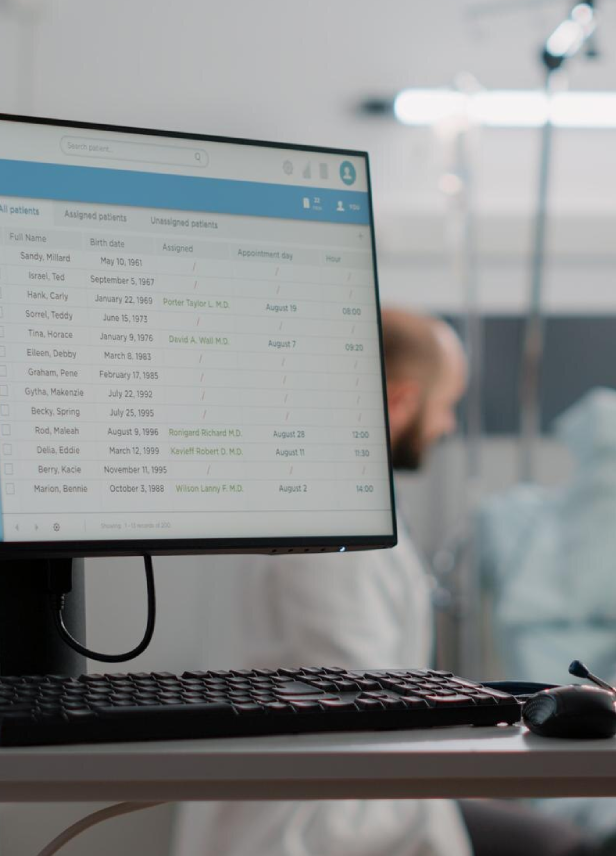
Erp for Hospital Patient Management
Erp orf hospital Initial business environment

The Initial Operational Environment

The healthcare provider had expanded its services over the years, but its operational systems had not evolved at the same pace.

Different departments used separate platforms to manage daily activities. The lack of information sharing between finance, procurement, HR, and inventory teams reduced operational efficiency.

Several critical processes still relied on manual administration, resulting in delays and increased workloads for hospital staff.

The organization faced challenges such as:

  • Separate systems for finance, procurement, HR and inventory.
  • Manual patient administration workflows
  • Delayed medical inventory tracking
  • Inefficient procurement coordination
  • Limited access to real-time operational data
  • Slow reporting and decision-making processes
  • These problems had an impact on internal efficiency as well as on the overall efficiency of the services provided.

The Core Operational Challenges Faced by the Hospital

As the number of patients grew, keeping track of medical supplies and equipment became more challenging.

Inventory information was often updated manually, making it challenging to maintain accurate stock levels. Delayed inventory visibility sometimes led to shortage of essential medical items or unnecessary overstocking.

Hospital management required a more effective and efficient inventory movement tracking solution and stock control.

Administrative Workflow Inefficiencies

Many administrative tasks required manual processing and approvals.

Patient registration, record updates, staff coordination, and internal requests often involved multiple steps and extensive paperwork. These processes created more administrative work and reduced the speed of the daily processes.

The lack of automation also created opportunities for human error.

The procurement team struggled to coordinate purchasing activities efficiently.

Purchase requests had to go through a long approval system, and vendor information was stored in various systems. This made it challenging to track supplier performance, and to effectively coordinate procurement processes.

As a result, procurement cycles often took longer than expected.

The finance department faced challenges in generating timely and accurate reports.

Financial reporting involved lots of manual consolidation due to data being sourced from various systems. Management teams lacked visibility of the operational performance, making strategic planning more challenging.

It was necessary for the organization to have a system in place that would allow them to report in real time, and also give them more business insights.

Business Operational Challenges
Erp For Hospital - ERP Consultant Conducted the ERP Assessment

How ERP Consultant Conducted the ERP Assessment

ERP Consultant began the project with a detailed operational assessment to understand the hospital’s workflows, challenges, and business objectives.

The consulting team met with department heads, administrators, finance staff, procurement teams, and operational managers to collect data on current processes and identify inefficiencies.

The assessment focused on understanding how information moved across departments and where delays occurred.

Assessment Areas Reviewed

The ERP assessment reviewed several key operational functions, such as:

  • Patient administration processes
  • Medical inventory management
  • Procurement workflows
  • Vendor management procedures
  • Human resource operations
  • Financial management systems
  • Reporting processes
  • Approval workflows
  • Data management practices
  • Departmental coordination procedures

This assessment was instrumental in developing a solid implementation plan for ERP.

Assessment Areas - Hospital
Erp Solutions Framework - Hospital

The Solution Framework of ERP Consultant

Based on the assessment findings, ERP Consultant designed a centralized ERP framework that would connect all major departments through a single platform.

The goal was to enhance visibility, streamline repetitive work and ensure real-time accurate information to the management.

As an experienced ERP implementation consultant, ERP Consultant created a solution that focused on:

  • Centralizing operational data
  • Automating administrative workflows
  • Improving inventory visibility
  • Streamlining procurement activities
  • Enhancing financial reporting
  • Strengthening interdepartmental collaboration
  • To support future organisational growth
  • The goal was to make it more efficient, but without affecting the regular hospital operation.

Step-by-Step ERP Implementation Process

Step 1
Discovery and Planning

This project started with a detailed requirement gathering and process documentation.

01

Step 2
System Design and Configuration

The ERP system was tailored to meet the needs of the healthcare provider's operations and reporting requirements.

02

Step 3
Data Preparation and Migration

Existing business data was reviewed, validated, and migrated to the new ERP system.

03

Step 4
Workflow Automation

Manual administrative and procurement processes were automated to increase efficiency and cut down delays.

04

Step 5
Integration and Testing

Departments tested the system to ensure that all workflows were working correctly and accurately.

05

Step 6
User Training

Hospital staff received comprehensive training to facilitate their confidence in implementing the new system.

06

Step 7
Go-Live and Support

ERP Consultant offered continuous support during deployment to guarantee a smooth transition and rapid issue resolution.

07


Measurable Results Achieved by the Healthcare Provider

Following the implementation, the healthcare provider experienced significant operational improvements.

Workflow automation streamlined administrative processes, minimizing time on repetitive tasks. Real-time visibility on medical products aided in improved medical inventory tracking, enabling the organization to manage stocks more effectively.

Procurement activities became more efficient, allowing departments to coordinate purchases more effectively. The centralized nature of financial reporting also helped ensure that information was readily available and easily accessible, making financial reporting faster and more accurate.

Additional improvements included:

  • Increased transparency between departments.
  • Real-time reporting to improve decision-making process.
  • Improved inventory accuracy
  • Reduced manual administrative workload
  • Stronger procurement control
  • Enhanced operational coordination
  • Better data quality throughout business functions
  • Through ERP Consultant's efforts, the healthcare organization was able to modernize its processes and build a more productive environment to meet increasing patient needs. The project emphasizes the importance of strategic ERP implementation consulting for healthcare organizations to achieve long-term business efficiency, optimise workflows, and gain operational control.
Results Achieved by the Healthcare